
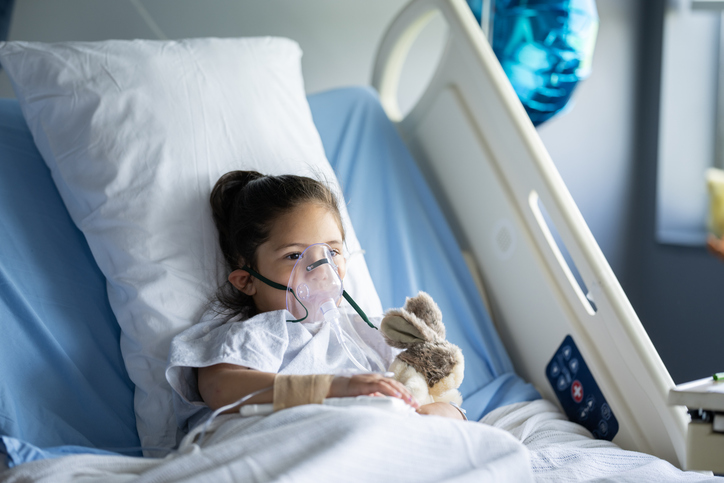
Hospital-acquired respiratory syncytial virus (HA-RSV) infections remain an under-recognized but substantial threat to hospitalized children, with new evidence showing they account for a notable share of RSV-related illness and appear to carry considerably higher mortality than community-acquired infections, according to research published in Influenza and Other Respiratory Viruses.
“HA-RSV has been previously reported to comprise a fifth of RSV-related deaths worldwide; however, understanding the implications of this is difficult without estimating the incidence of HA-RSV cases and the global HA-RSV disease burden,” explained the study authors.
The investigators conducted a systematic review and meta-analysis of English-language studies published from January 1975 to March 2024. They searched in major medical literature databases to identify studies reporting primary data on hospital-acquired RSV infections in pediatric populations, including cohorts of all hospitalized children, children with RSV, or children with healthcare-associated infections. In the meta‐analyses, the team pooled HA-RSV incidence and mortality rates, expressed per 1,000 person-years, as well as cumulative incidence and case-fatality rates.
Across 27 studies conducted in 11 countries, HA-RSV accounted for a notable proportion of pediatric morbidity and mortality. The investigators reported a pooled incidence rate of HA-RSV among hospitalized children of 10.86 cases per 1,000 person-years (95% confidence interval [CI], 3.83–17.89). The pooled mortality rate was similarly high at 11.34 deaths per 1,000 person-years (95% CI, 5.57–17.11), corresponding to a case-fatality rate of 13.30% (95% CI, 3.21%–23.40%). HA-RSV represented 15.57% of all RSV-related hospitalizations and 22.48% of healthcare-associated infections overall.
The investigators noted that the mortality burden of HA-RSV appears markedly higher than what has been reported for community-acquired RSV (CA-RSV). In their discussion, they highlighted that the pooled HA-RSV mortality rate of 11.34 deaths per 1,000 person-years substantially exceeds CA-RSV estimates from prior meta-analyses, including 6.21 deaths per 1,000 children in a 2017 study and five in-hospital deaths per 1,000 children per year in a 2023 study. Similarly, the case-fatality rate of 13.30% reported for HA-RSV far surpasses the 0–1.7% CA-RSV case-fatality rate described in a 2022 systematic review. The investigators also noted that while HA-RSV accounted for 15.57% of RSV hospitalizations in their pooled analysis, the RSV GOLD registry, an international registry of fatal pediatric RSV cases, reported that 20% of RSV-related deaths in children under 5 were hospital-acquired.
“Our meta-analysis highlights the significant burden of HA-RSV in hospitalized pediatric patients, underscoring the importance of recognizing HA-RSV as a serious and widespread issue in hospital settings, which accounts for a substantial portion of pediatric [healthcare-associated infections],” concluded the investigators. “Despite limitations, our findings emphasize the urgent need for enhanced infection-control measures, targeted prevention strategies, and dedicated research to unravel the drivers of increased HA-RSV mortality.”
link